

Mcp

The Silent Breakage: A Versioning Strategy for Production-Ready MCP Tools

The Silent Breakage: A Versioning Strategy for Production-Ready MCP Tools

The Model Context Protocol (MCP) is unlocking a new era of connectivity between LLMs and our data. But as we move from “cool demos” to production systems, we are hitting a wall that every API developer recognizes, yet few are prepared for: Versioning.

If you treat an MCP server exactly like a standard REST API, you will break your agents.

While a standard API usually breaks loudly (throwing 400/500 errors) when a contract changes, MCP tools often break silently. A changed tool description or a renamed parameter doesn’t just cause a validation error; it causes the LLM to hallucinate, misunderstand its instructions, or fail to execute a Critical User Journey (CUJ) that worked five minutes ago.
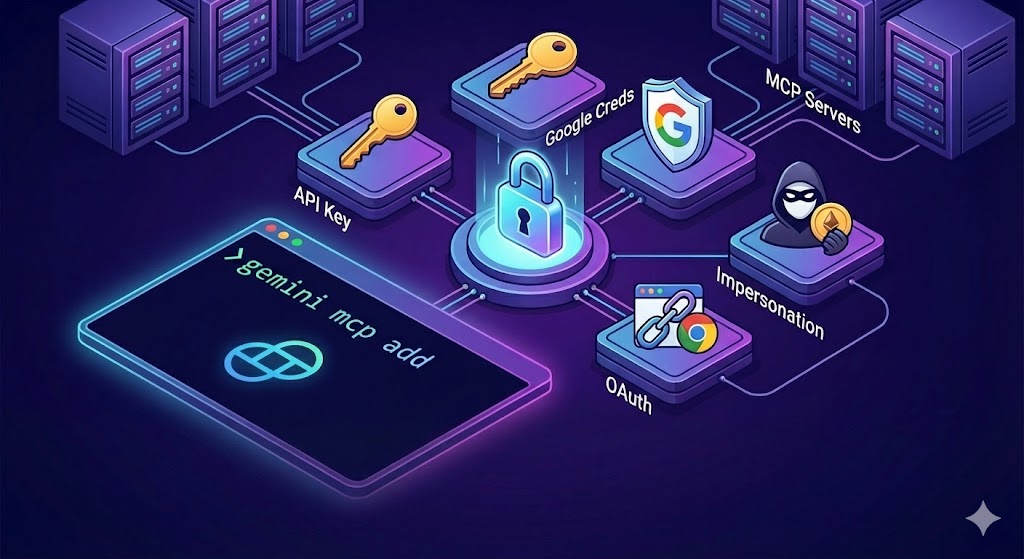

Gemini CLI Beyond the Basics: Choosing the Right MCP Authentication

Gemini CLI Beyond the Basics: Choosing the Right MCP Authentication

The Gemini CLI offers flexible authentication strategies to secure your Model Context Protocol (MCP) connections. Whether you are connecting to a simple MCP server exposing a couple of tools or a strictly governed enterprise service on Google Cloud, selecting the right authentication method is critical for both security and usability.

Defining “Security” in a CLI Context

Before diving into configuration, it is important to define what “secure” means when running a local CLI. We aren’t just talking about encryption in transit (HTTPS); we are talking about Local Credential Management and Token Lifespan.

Unpacking Security Flaws in MCP

Unpacking Security Flaws in MCP

Hey there, fellow AI application builders. Ever feel like your AI assistants are a bit like magic? You whisper a command, and poof – things happen. From booking flights to drafting emails, these intelligent agents are becoming an indispensable part of our lives. And behind a lot of this magic, especially when it comes to connecting AI models to the real world, is something called the Model Context Protocol, or MCP.